A real place on screen
Natural History Museum
A Romanesque-inspired museum faced in patterned terracotta, with animals and plants worked into its surfaces. Hintze Hall’s broad stair and galleries make it both a public collection and a spectacular piece of civic architecture.
- Architect / attribution
- Alfred Waterhouse
- Building chronology
- Opened 1881
- Place
- South Kensington, London, United Kingdom
The real building
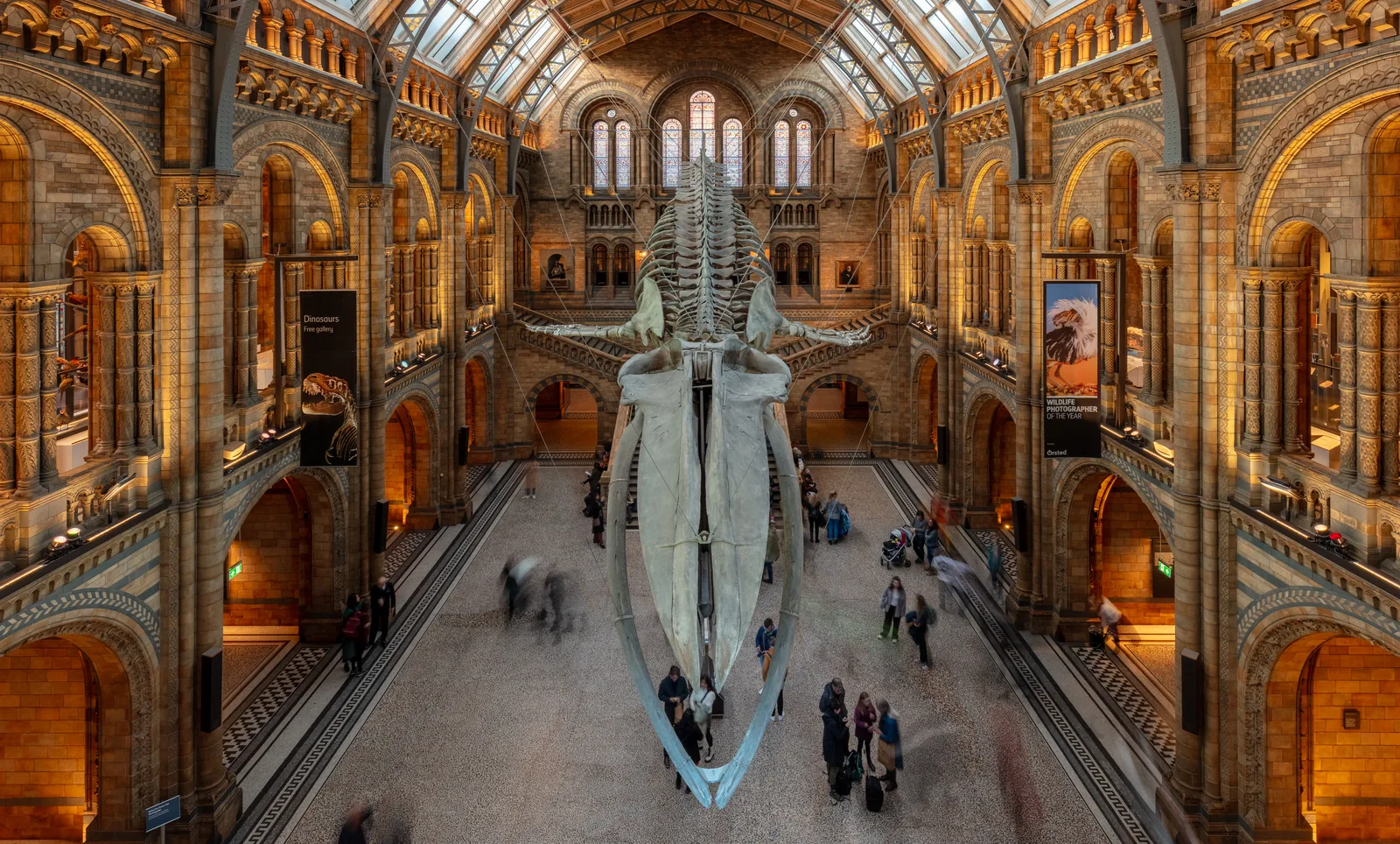
Blue whale skeleton at the Central Hall of the Natural History Museum, London, England. 'Hope', nickname of the blue whale skeleton, is 25.2 metres (83 ft) long and has been suspended from the ceiling since July 14th 2017. Blue whales are the largest creatures ever to have lived. In the 1800s there were an estimated 250,000 blue whales in the world's oceans. After decades of commercial hunting the species was at the brink of extinction, with only around 400 surviving in 1966. That year the world took action in London and decided to legally protect blue whales from commercial hunting. Since then the population of blue whales has steadily grown to its current level of around 20,000.
Films at Natural History Museum
Paddington (2014)
On screen: The museum finale
The museum identifies itself as a significant location in the first Paddington film, including action in its galleries.
In the film
Movie frames and production stills are shown separately from photographs of the real building. Film and image credits remain with their respective owners.
Movie frame
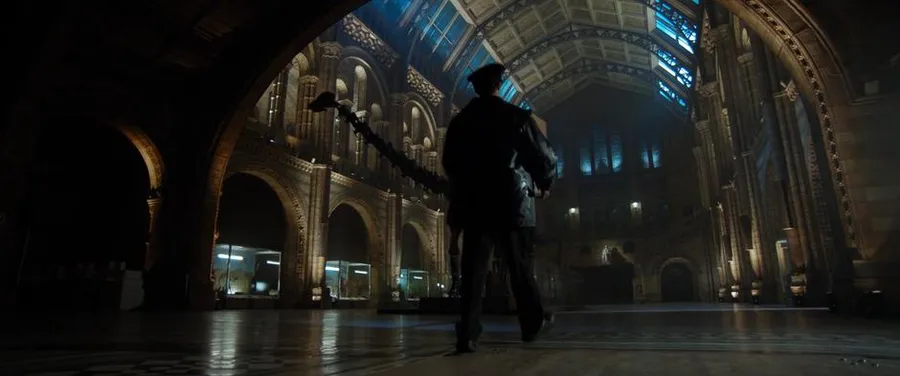
StudioCanal S.A. TF1 Films Production S.A.S. · Scene image source
Movie frame
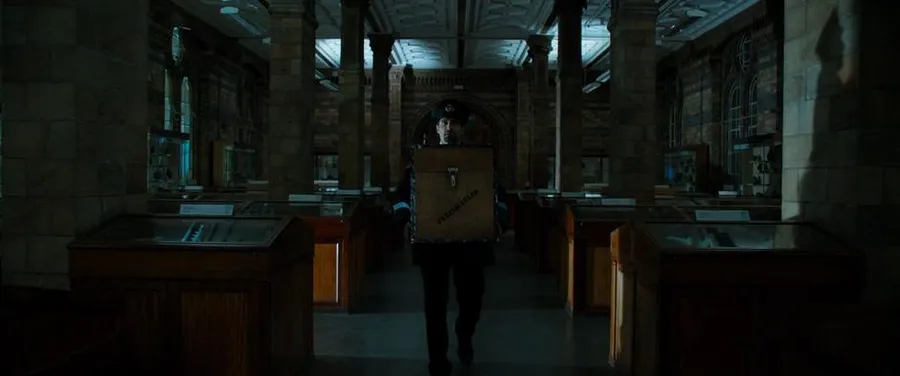
StudioCanal S.A. TF1 Films Production S.A.S. · Scene image source
Filming evidence
Building sources
A screen appearance does not imply public access. Consult the venue for current visiting arrangements.