A real place on screen
Ta Prohm
Stone galleries, enclosed courts and tree roots are entwined at this former Buddhist monastery. The surviving complex belongs to the great urban and religious landscape of Angkor, rather than an isolated adventure-film ruin.
- Architect / attribution
- Khmer royal builders; commissioned by Jayavarman VII
- Building chronology
- Founded 1186; later additions
- Place
- Angkor, Siem Reap, Cambodia
The real building
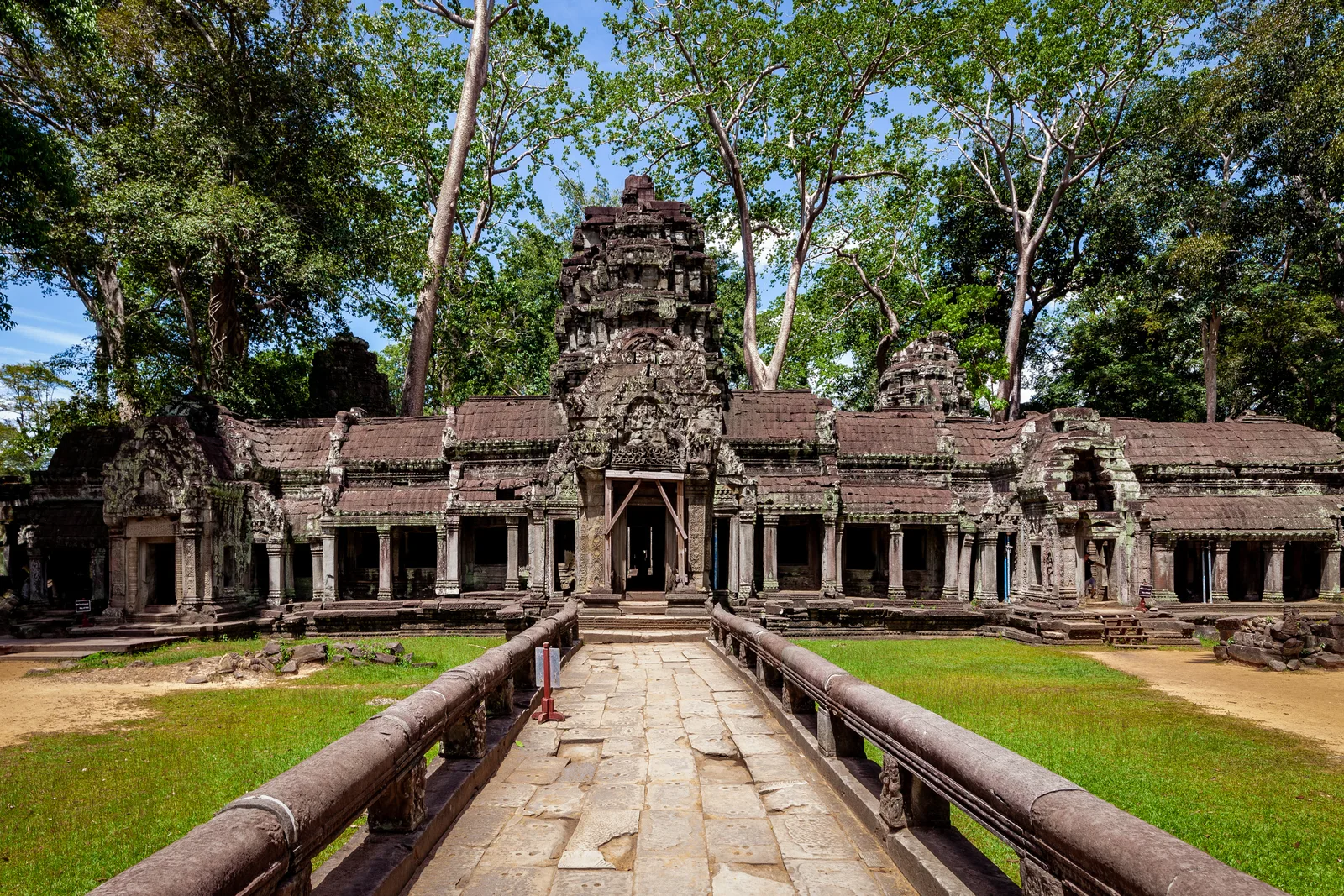
Ta Prohm (Khmer: ប្រាសាទតាព្រហ្ម, pronunciation: prasat taprohm) is the modern name of the temple at Angkor, Siem Reap Province, Cambodia, built in the Bayon style largely in the late 12th and early 13th centuries and originally called Rajavihara (in Khmer: រាជវិហារ). Located approximately one kilometre east of Angkor Thom and on the southern edge of the East Baray, it was founded by the Khmer King Jayavarman VII[1]:125[2]:388 as a Mahayana Buddhist monastery and university. Unlike most Angkorian temples, Ta Prohm is in much the same condition in which it was found: the photogenic and atmospheric combination of trees growing out of the ruins and the jungle surroundings have made it one of Angkor's most popular temples with visitors. UNESCO inscribed Ta Prohm on the World Heritage List in 1992. Today, it is one of the most visited complexes in Cambodia’s Angkor region. The conservation and restoration of Ta Prohm is a partnership project of the Archaeological Survey of India and the APSARA (Authority for the Protection and Management of Angkor and the Region of Siem Reap).
Films at Ta Prohm
Lara Croft: Tomb Raider (2001)
On screen: The Cambodian temple expedition
Ta Prohm’s real stone architecture and trees appear in the temple sequence; the film’s mechanisms and hidden spaces are fictional additions.
In the film
Movie frames and production stills are shown separately from photographs of the real building. Film and image credits remain with their respective owners.
Movie frame
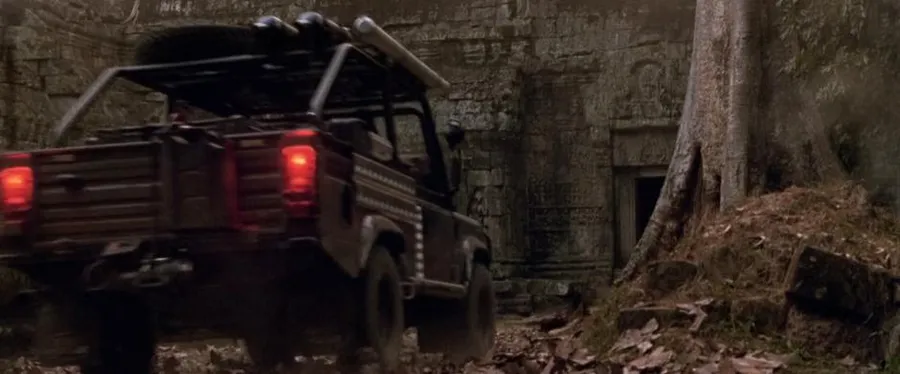
KFP Produktions GMBH & Co. KG · Scene image source
Movie frame
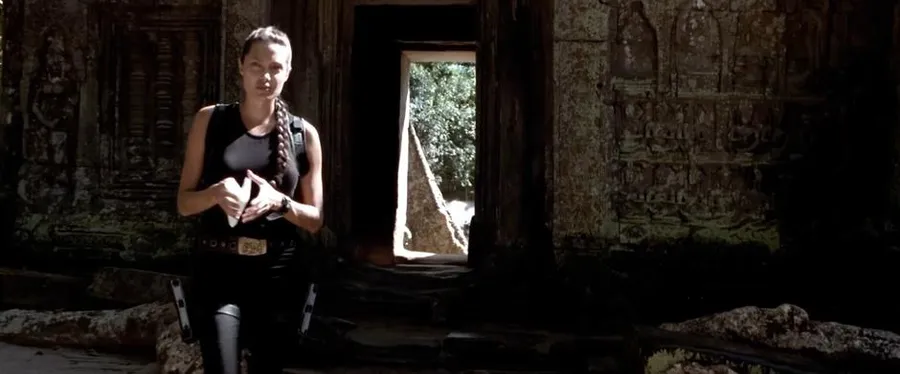
KFP Produktions GMBH & Co. KG · Scene image source
Filming evidence
Building sources
A screen appearance does not imply public access. Consult the venue for current visiting arrangements.