Built work
Solomon R. Guggenheim Museum
- Architect
- Frank Lloyd Wright
- Place
- New York, New York, United States
- Construction
- Completed 1959
- Design / archive date
- 1943–56
- Catalogue reference
- FLWFA 4305 / S.400
Upper East Side, NYC
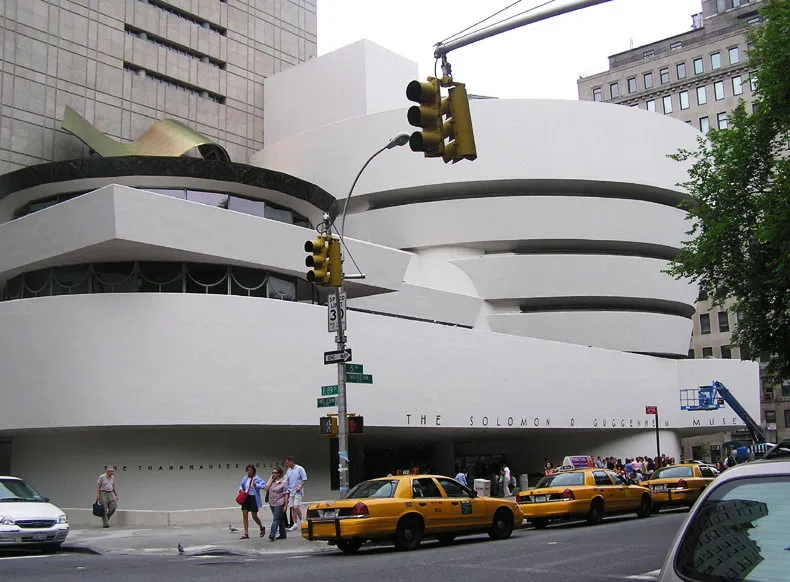
Guggenheim museum exterior.jpg
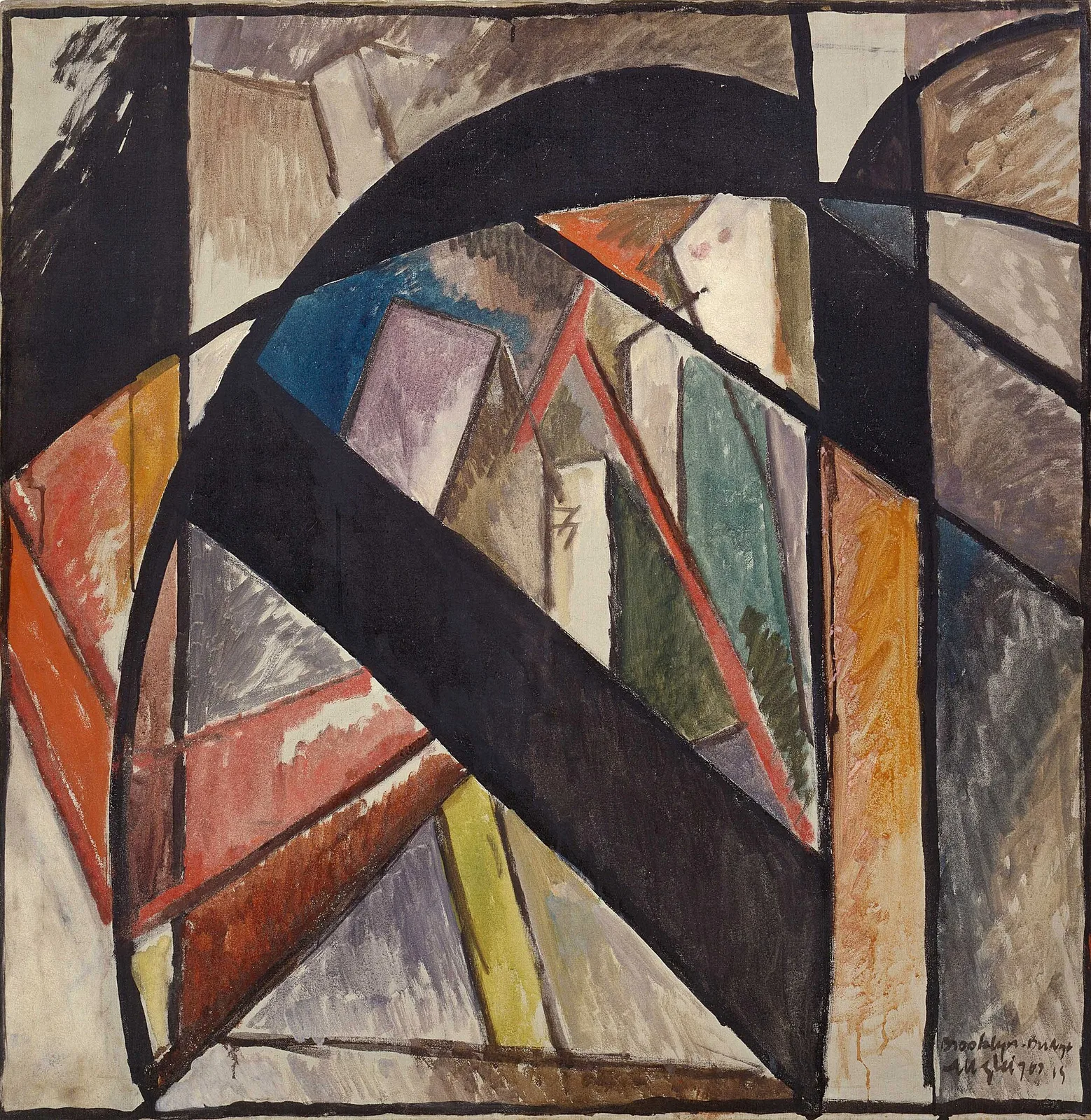
Albert Gleizes, 1915, Brooklyn Bridge, oil and gouache on canvas, 102 x 102 cm, Solomon R. Guggenheim Museum, New York.jpg
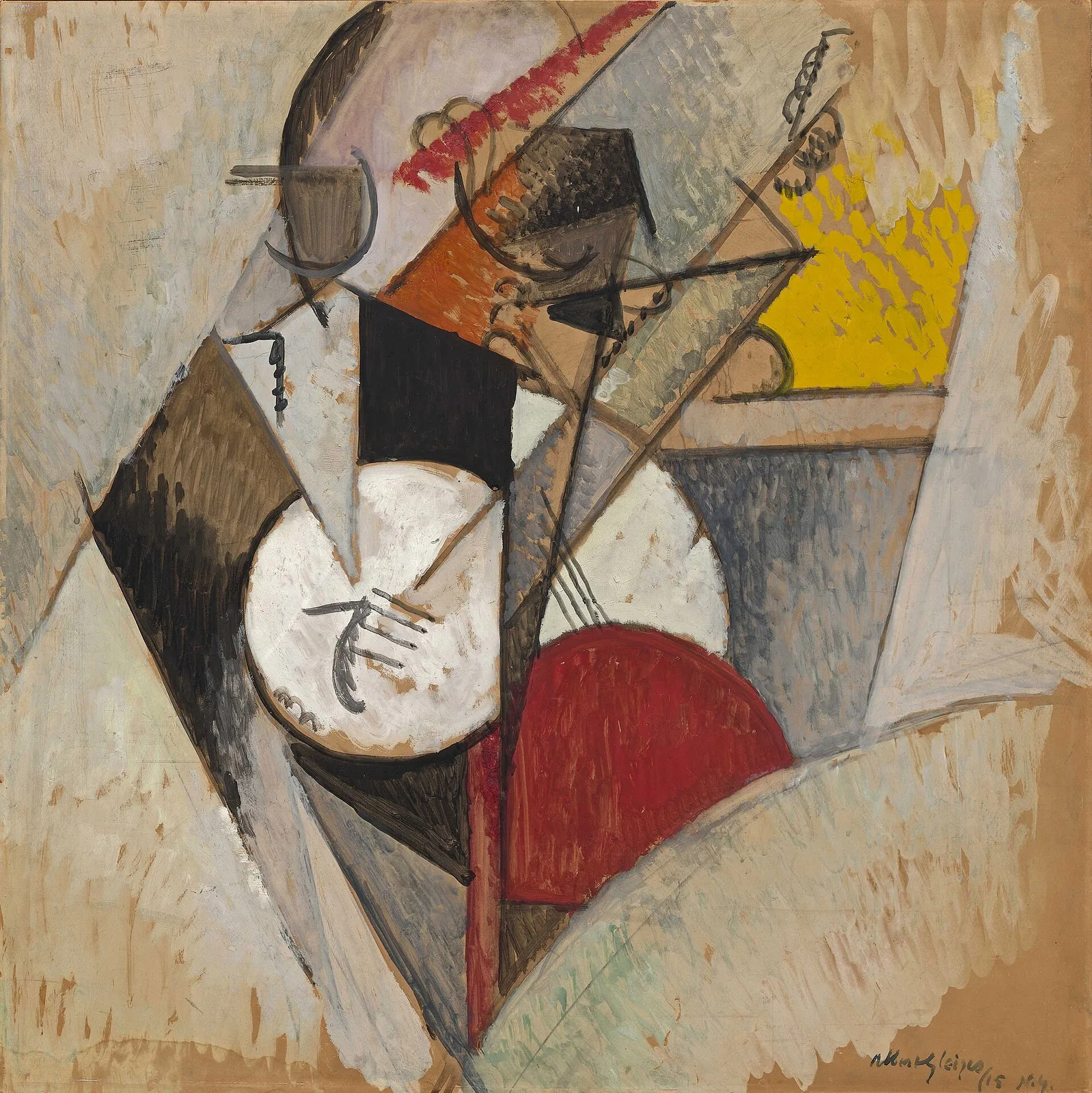
Albert Gleizes, 1915, Composition pour Jazz, oil on cardboard, 73 x 73 cm, Solomon R. Guggenheim Museum, New York.jpg
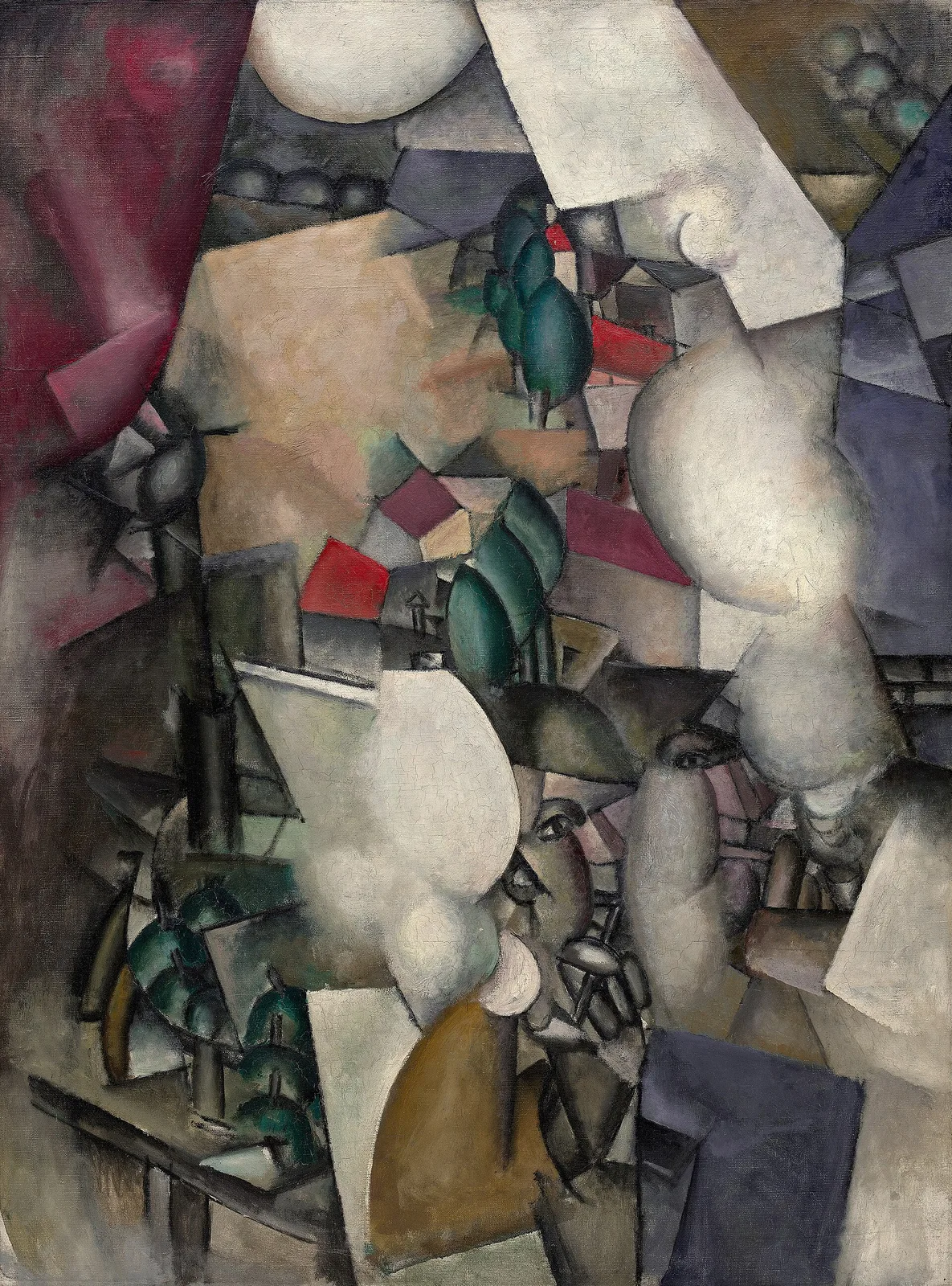
w:Fernand Léger , 1911-1912, Les Fumeurs (The Smokers) , oil on canvas, 129.2 x 96.5 cm
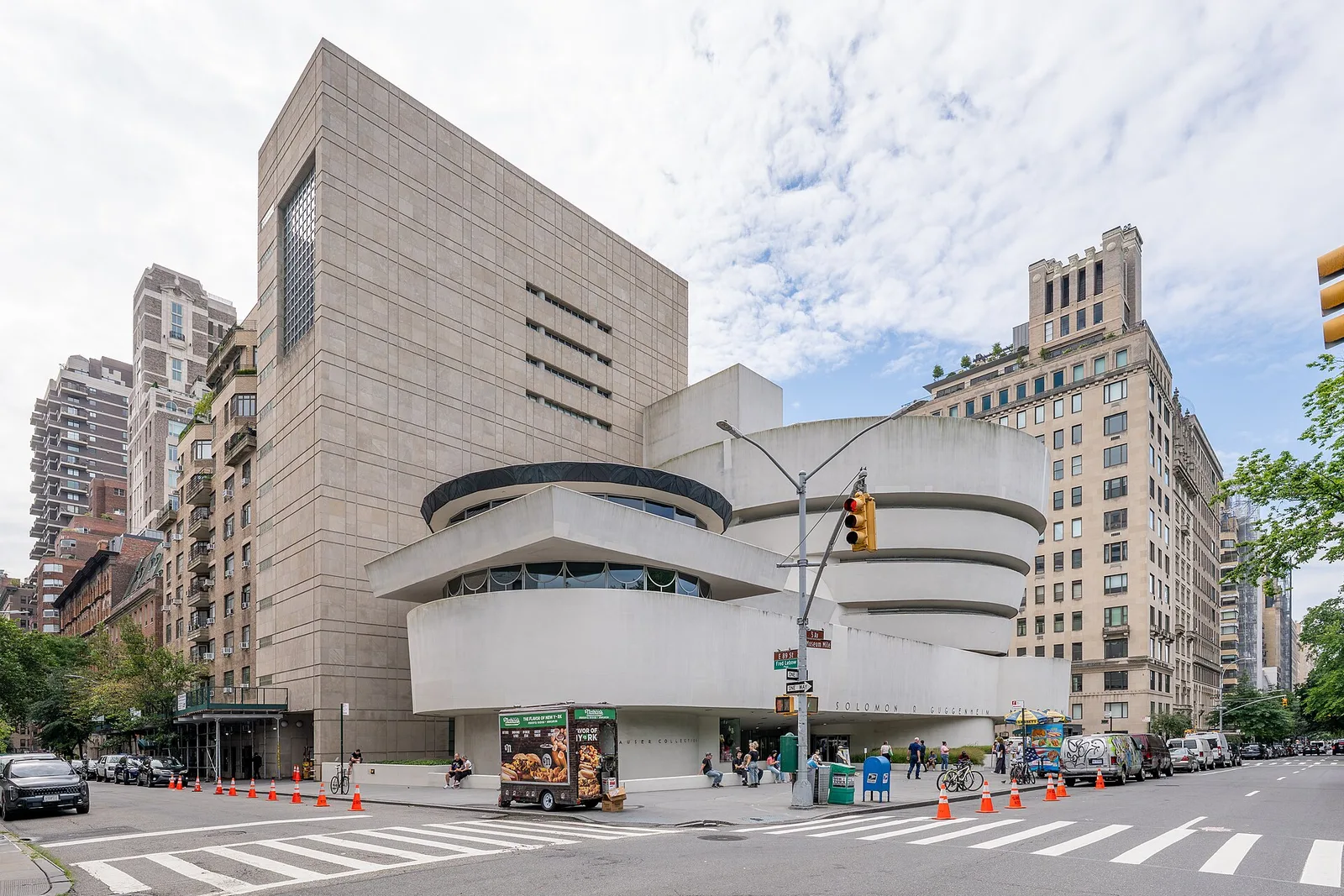
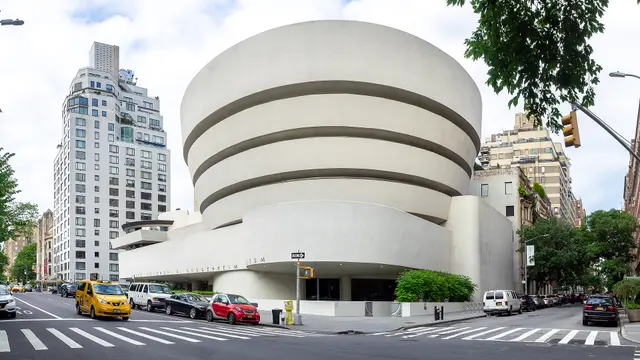
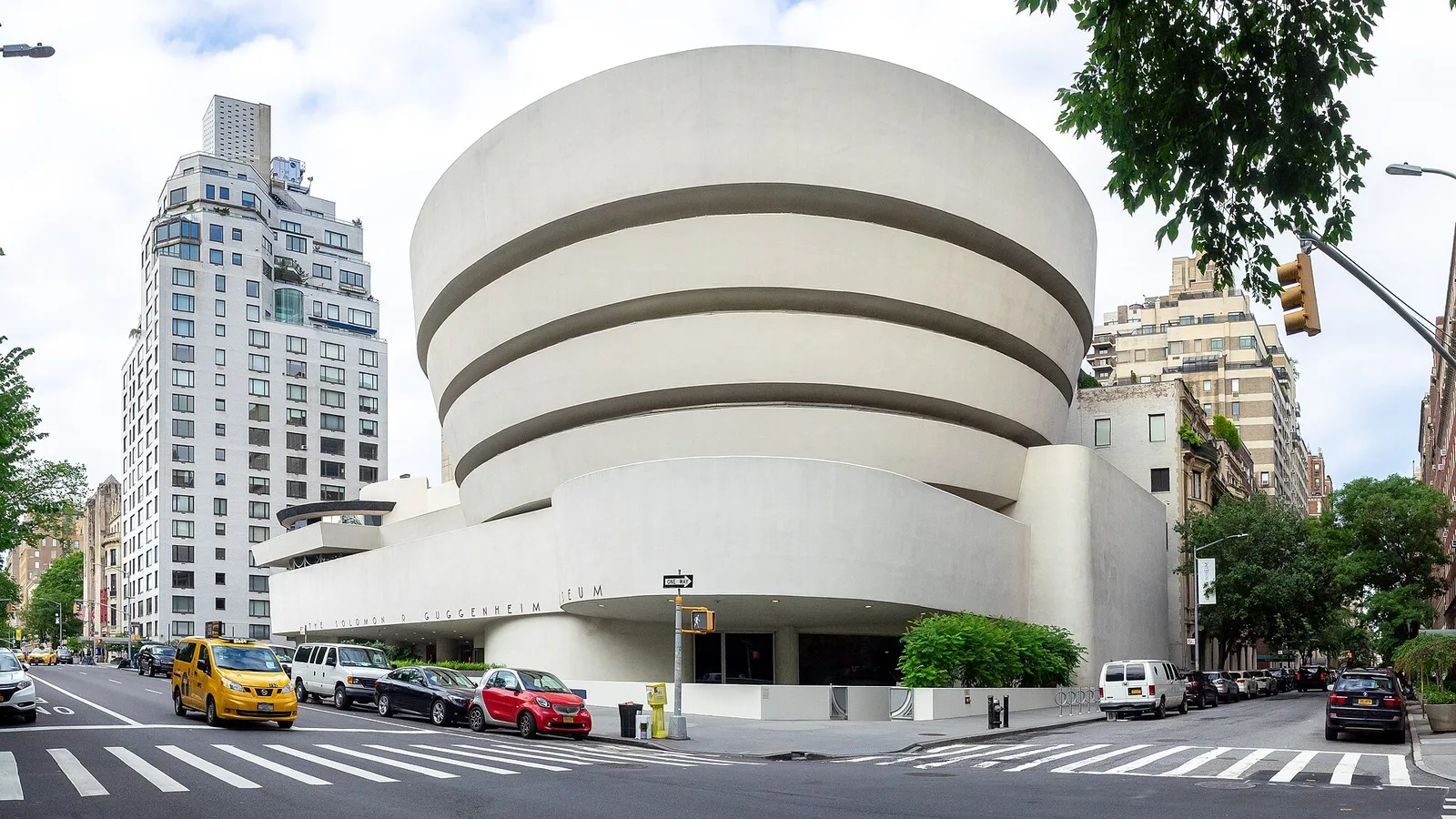
The Solomon R. Guggenheim Museum at 1071 Fifth Avenue and East 88th Street on Manhattan’s Upper East Side, viewed from across Fifth Avenue and photographed on August 24th. The museum’s landmark building was designed by Frank Lloyd Wright.
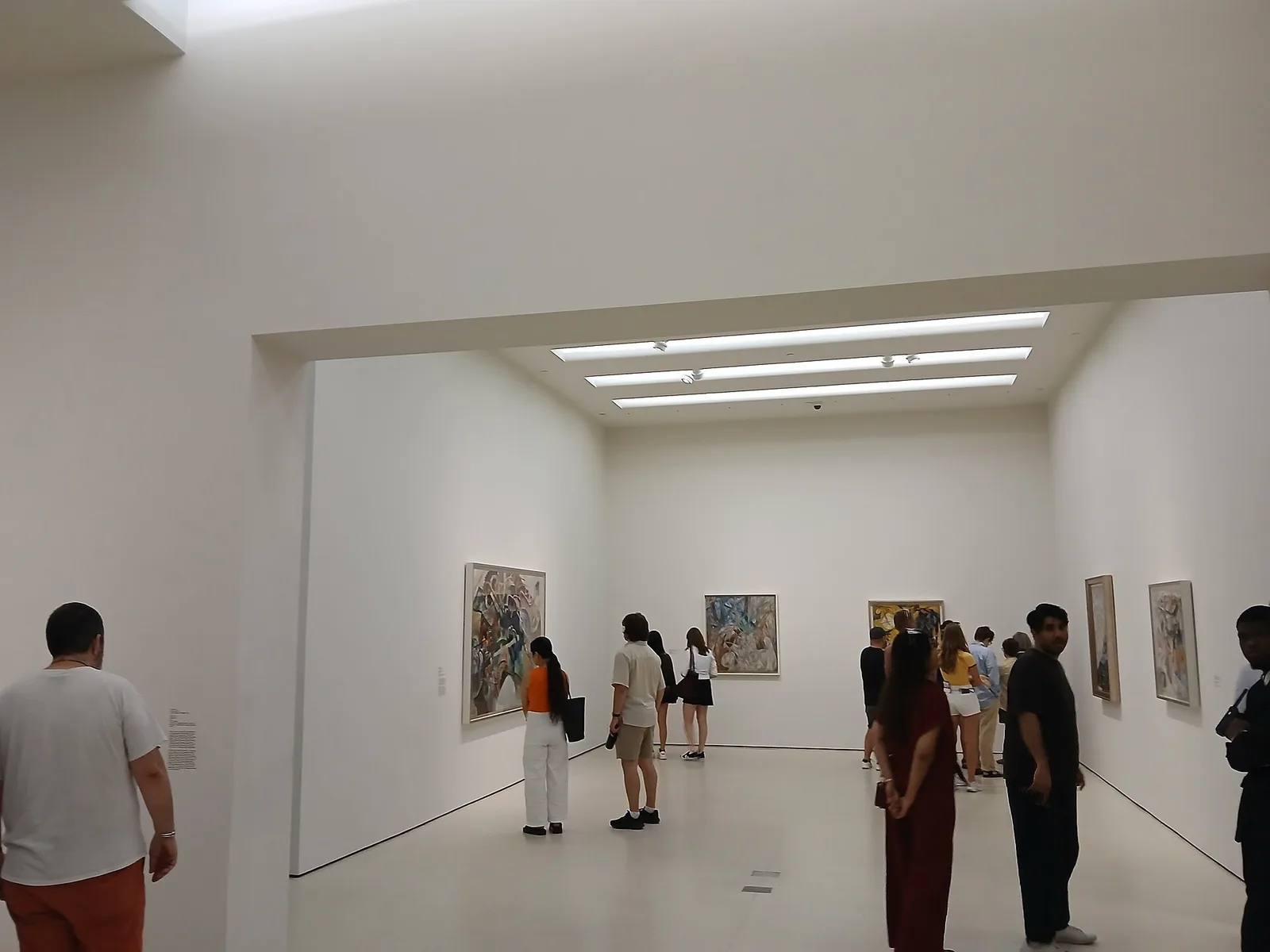
Interior of the Solomon R. Guggenheim Museum in Manhattan, New York, seen in August 2026
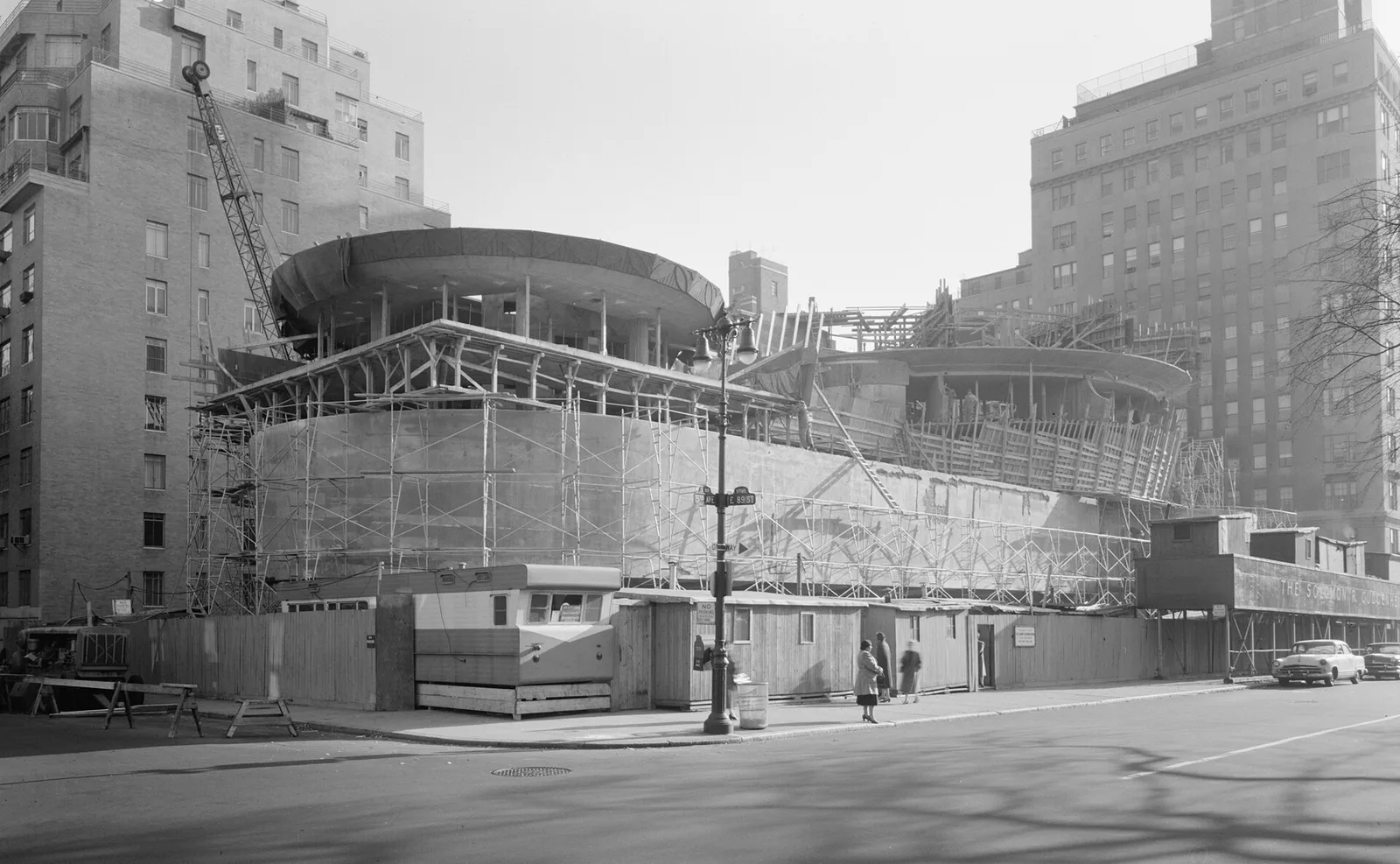
Guggenheim Museum, 88th St. & 5th Ave., New York City. Under construction II
Guggenheim flw show.jpg
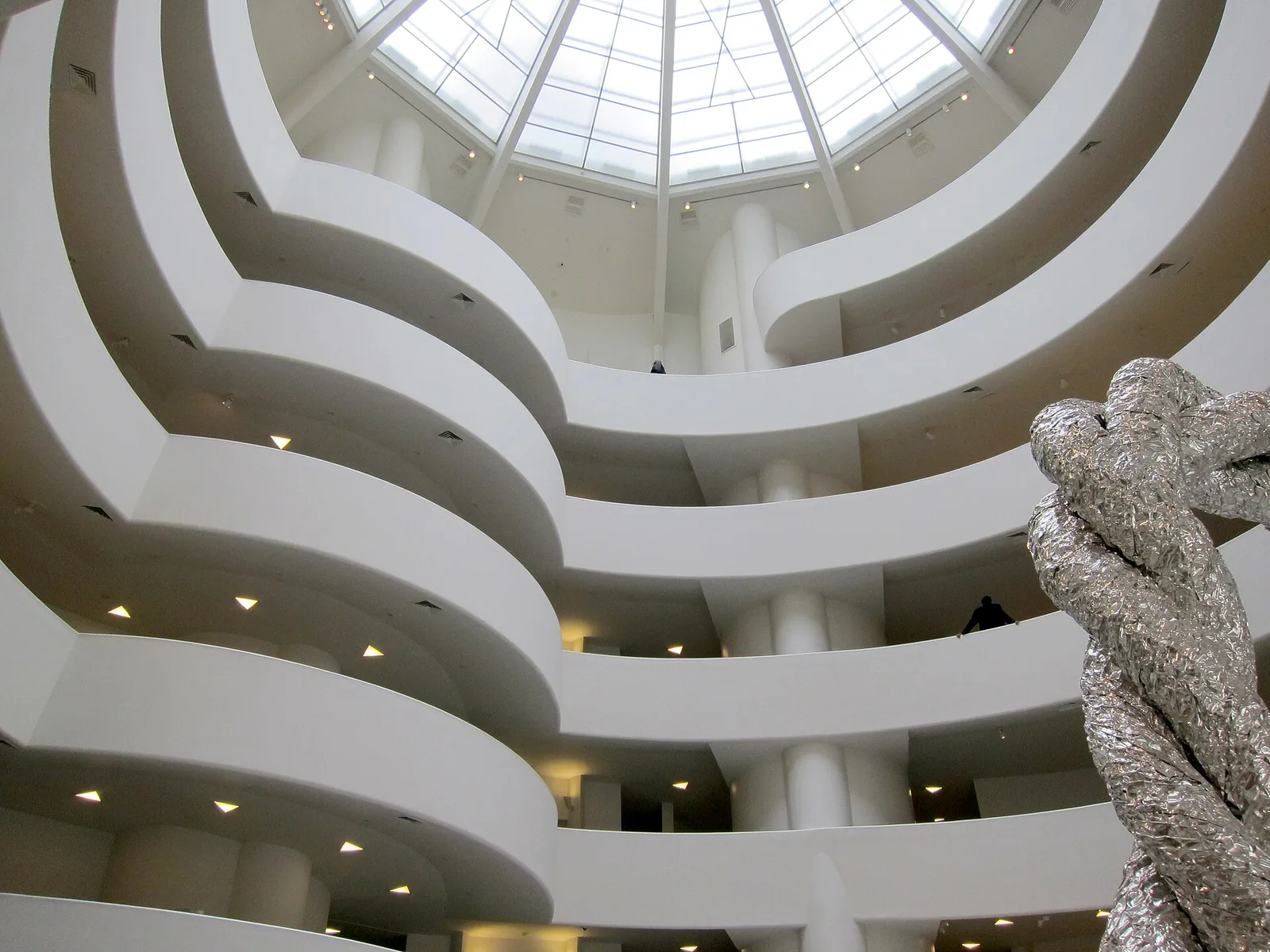
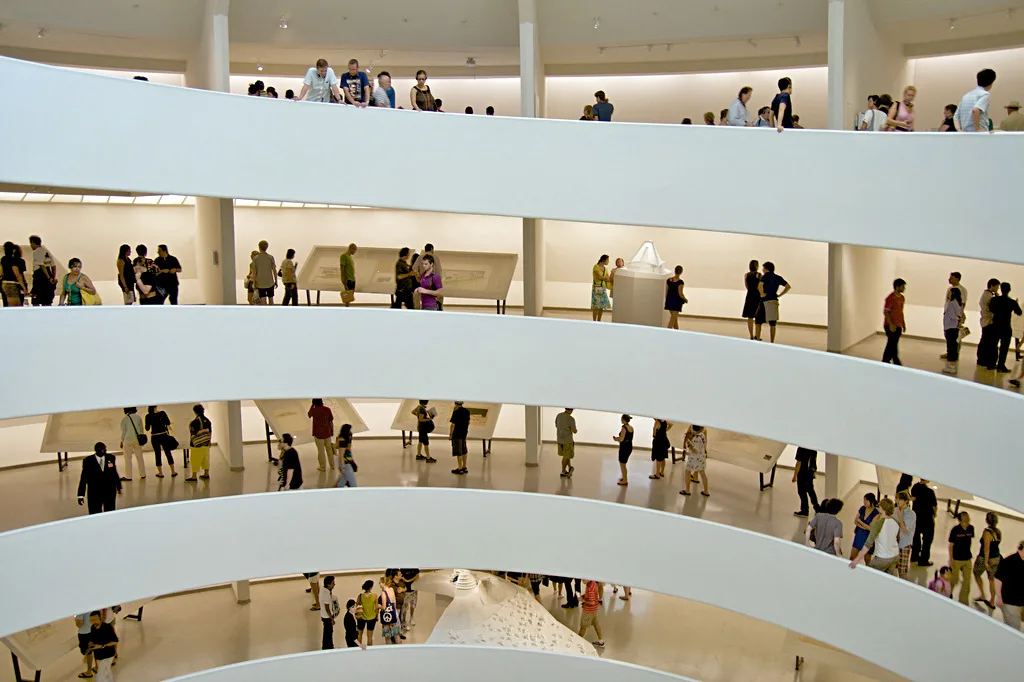
The inside of the Solomon R Guggenheim museum in Manhattan. Taken from the large open area on the ground floor, you can see the museum's unique design as the floor slowly ramps up around the edge of the museum, creating many levels for people to walk through. The work "Sphinx Grin Two" by John Chamberlain can be seen in the foreground.
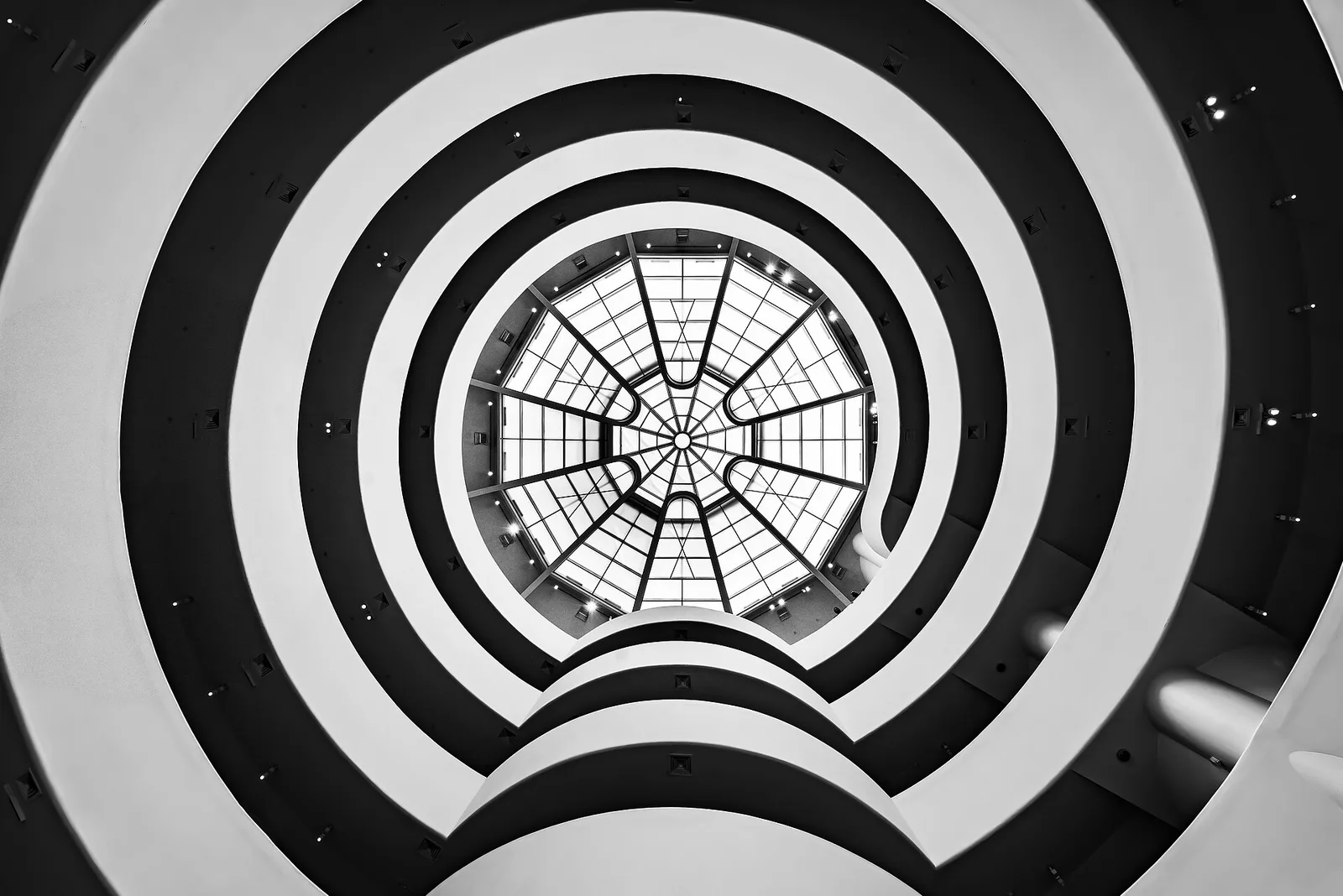
The skylight located in the Solomon R. Guggenheim Museum in Manhattan, NY. The museum is designed so the skylight can fill up the museum with light to all floors.
Architecture & history
The Solomon R. Guggenheim Museum, often referred to as The Guggenheim, is an art museum at 1071 Fifth Avenue between 88th and 89th Streets on the Upper East Side of Manhattan in New York City. It hosts a permanent collection of Impressionist, Post-Impressionist, early Modern and contemporary art and also features special exhibitions throughout the year. It was established by the Solomon R. Guggenheim Foundation in 1939 as the Museum of Non-Objective Painting, under the guidance of its first director, Hilla von Rebay. The museum adopted its current name in 1952, three years after the death of its founder Solomon R. Guggenheim. It continues to be operated and owned by the Solomon R. Guggenheim Foundation.
The museum's building, a landmark work of 20th-century architecture designed by Frank Lloyd Wright, drew controversy for the unusual shape of its display spaces and took 15 years to design and build; it was completed in 1959. It consists of a six-story, bowl-shaped main gallery to the south, a four-story "monitor" to the north, and a ten-story annex to the northeast. A six-story helical ramp extends along the main gallery's perimeter, under a central ceiling skylight. The Thannhauser Collection is housed within the top three stories of the monitor, and there are additional galleries in the annex and a learning center in the basement. The museum building's design was controversial when it was completed but was widely praised afterward. The building underwent extensive renovations from 1990 to 1992, when the annex was built, and it was renovated again from 2005 to 2008.
The museum's collection has grown over the decades and is founded upon several important private collections, including those of Guggenheim, Karl Nierendorf, Katherine Sophie Dreier, Justin Thannhauser, Rebay, Giuseppe Panza, Robert Mapplethorpe and the Bohen Foundation. The collection, which includes around 8,000 works as of 2022, is shared with sister museums in Bilbao and Venice. In 2023, nearly 861,000 people visited the museum.
Reference overview adapted from Wikipedia contributors under CC BY-SA 4.0. Formatting adapted for Arch Moods.
Research notes
A familiar building can acquire a visual identity that differs from its first material treatment.
The Guggenheim is one of the eight components of UNESCO’s Wright serial property. Its museum role makes it a useful counterpart to houses and working studios in the same group.
An archival account identifies Hollingshead Cocoon coating and the original Buff exterior treatment. That historical specification should not be substituted for the present white finish. The question is how a building’s surface history differs from the form people recognise.
What the sources do not establish
- The current coating product and repainting specification are not established here.
Sources & evidence
- UNESCO — Wright World Heritage property
Eight-building serial property includes the Guggenheim and Fallingwater; organic architecture connects space, materials and setting.
- Architectural Digest — archival account of Guggenheim colour
Original Hollingshead Cocoon coating and Buff exterior treatment, distinct from the present white appearance.
Research checked 2026-11-02 · Editorial policy & corrections
Browse all Wright records · Documented material specifications
Documented materials
Verified project and conservation specifications. This is a partial record; original and later conservation phases are distinguished.
Hollingshead Cocoon coating
- Used for
- Exterior coating over the concrete structure
- Product
- Cocoon
- Manufacturer
- Hollingshead
- Finish
- Buff — exterior topcoat approved July 1958
- Phase
- Original museum exterior — 1958–59
The documented latex-and-vinyl coating and Buff colour describe the original exterior treatment, not the museum’s present white finish.
Specification evidence
Checked 2026-10-30