Architecture on screen
Blade Runner’s real Los Angeles buildings
Blade Runner builds a fictional city from real architecture, constructed sets and visual effects.
Bradbury Building: the vertical interior
The Conservancy’s guide identifies the final confrontation at the Bradbury Building. Its stairs, open lifts and glazed roof make a strong comparison between architectural space and the film’s darker treatment of it.
Union Station: a civic-scaled room recast
The Historic Ticketing Hall becomes police headquarters. The station itself confirms the filming connection; its everyday railway role and fictional institutional role should remain distinct.
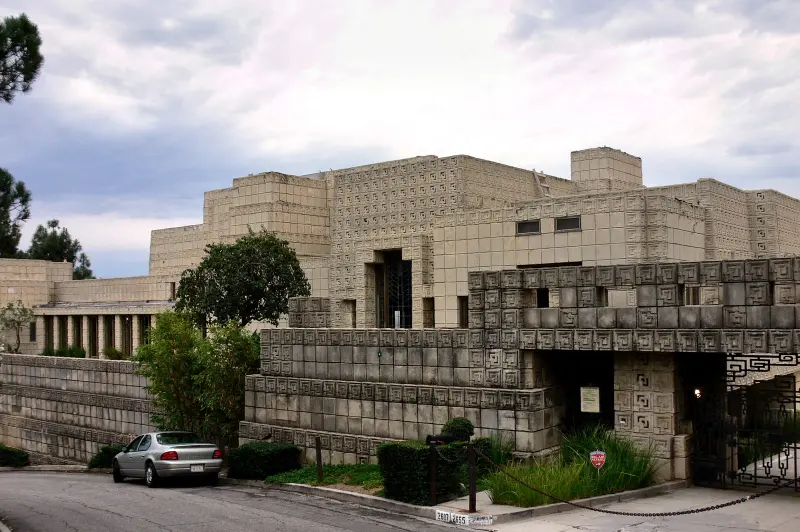
Ennis House: a material vocabulary on screen
Ennis supplies a documented Wright connection. Compare the real block relief with the film images, while avoiding the claim that the complete fictional apartment is the real house interior.
Access follows the real place
The Bradbury and station are working buildings, and Ennis is a private residence. Check current venue arrangements; film stills are not evidence that a particular room, staircase or house is open to visitors.
Follow the story on screen.
The research behind the guide
Sources & further reading.
Follow the original project accounts and evidence for the details discussed here.
View 3 source references
Sources & evidence
- Los Angeles Conservancy — Downtown L.A. filming guide
Bradbury Building showdown; Union Station ticket-concourse police headquarters; respect private property.
- Los Angeles Union Station — Blade Runner screening notes
Scenes were shot in the Historic Ticketing Hall.
- Los Angeles Conservancy — Ennis House
Textile-block house; Frank Lloyd Wright and Lloyd Wright attribution; Blade Runner filming connection; private residence.
What the sources do not establish
- The guide is a researched selection, not an inventory of every location or set.
Research checked 2026-11-02 · Editorial policy & corrections